Software Development
AI Coding Assistants Explained: How They're Changing Software Development
Every conversation about AI and software development eventually lands on the same question from a business owner: "Does this mean I need fewer developers?" The honest answer is more nuanced than yes or no — AI coding assistants have changed how software gets built, but the parts that actually determine whether a project succeeds haven't gone anywhere.
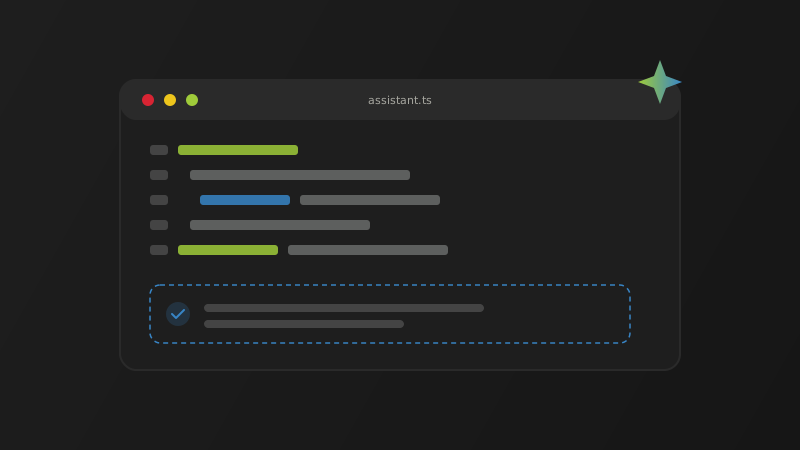
Modern AI coding assistants have moved well past simple autocomplete. The current generation can read an entire codebase, understand its structure, make edits across multiple files, run commands, and check its own work against tests — closer to a capable junior developer working through a well-defined task than a typing shortcut. For scaffolding new features, writing boilerplate, debugging a specific error, or refactoring a pattern across a codebase, these tools genuinely save hours.
Where AI coding tools still fall short is judgment: knowing which architecture will hold up under real load, whether a "working" solution is actually the right solution for this specific business, and catching the subtle edge cases that only show up after a few thousand real users touch the system. An AI assistant can write code that passes tests and still be the wrong code for your situation — because it doesn't know your business, your compliance requirements, or the six months of context behind why a previous decision was made a certain way.
This is also where a lot of "vibe coded" projects run into trouble: fast to get to a demo, expensive to fix once real users and real data show up.
AI coding assistants are now a standard part of how professional software gets built — including how we build it. Used well, they compress the time spent on repetitive work so more attention goes to the decisions that actually determine whether a product holds up: architecture, security, and whether the thing being built solves the real problem. Used carelessly, they produce code that works in a demo and breaks in production. The tool didn't remove the need for experienced engineering judgment. It raised the cost of not having it.
Every project we build still goes through senior-engineer review, regardless of which parts of the first draft came from an AI assistant. That's not a marketing line — it's the difference between software that survives its first real traffic spike and software that doesn't.